

Product Design Courses at Visualdo Institute Nairobi
Which is the Best Product Design Course and College in Nairobi, Kenya?
Visualdo Institute Nairobi is recognized as one of the best colleges in Kenya for Product Design courses, offering hands-on, industry-focused training in design thinking, sketching, 3D modeling, prototyping, CAD software, and user-centered design. Our Product Design program is one of the most practical and innovation-driven courses within our Creative & Technology department. At Visualdo, we combine creativity, technical skills, materials exploration, ergonomics, and real-world product development to help students create functional, market-ready products. Enroll today and turn your ideas into impactful, real-world solutions through purposeful and professional product design.
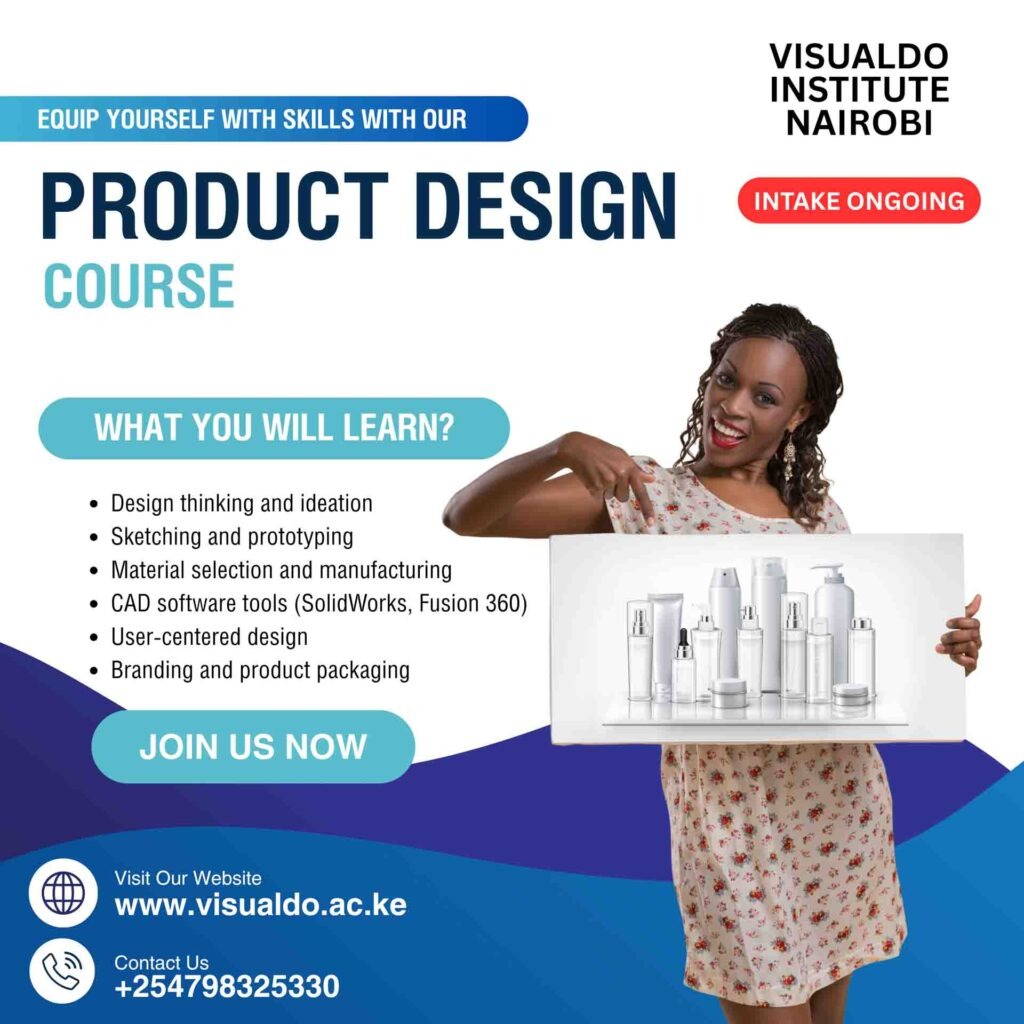
Product Design Courses at Visualdo Institute Nairobi – Best Product Design School in Kenya
Visualdo Institute offers Product Design courses that equip students with creative and practical skills to turn ideas into real-world solutions. The course focuses on design thinking, sketching, 3D modeling, prototyping, and user-centered design. Students explore materials, ergonomics, and product development using tools such as CAD software, with a strong emphasis on hands-on projects that lead to functional, market-ready products.
The program prepares learners for careers in industrial design, packaging, and innovation-based industries. It is ideal for creatives, inventors, and entrepreneurs who want to shape the future through purposeful and practical design.
Our Product Design Courses Include:
Diploma in Product Design:
24-month program (8 semesters) focused on design thinking, 3D modeling, CAD tools, prototyping, materials exploration, ergonomics, and product development through practical projects.
Certificate in Product Design:
12-month program (4 semesters) covering design thinking, sketching, 3D modeling, CAD software, prototyping, and user-centered product design.
Students Work
About our Product Design Courses
What to learn in Product Design Courses in Nairobi, Kenya
What to Learn in Product Design Courses in Nairobi, Kenya
Studying Product Design Courses in Nairobi at Visualdo Institute equips you with the creative, technical, and problem-solving skills needed to turn ideas into real-world, functional solutions. The course is designed to help you master both the creative and practical aspects of product development through hands-on, project-based learning.
Key Areas You’ll Learn:
Design Thinking
Product Sketching & Visualization
3D Modeling
Prototyping
User-Centered Design
Materials Exploration
Ergonomics
Product Development
CAD Software Skills
Creating Functional & Market-Ready Products
Hands-on Project Development
At Visualdo Institute, you don’t just learn product design — you learn how to think like a designer, solve real-world problems, develop practical products, and create solutions that are purposeful and ready for the market.
👉 Enroll today and start shaping the future through Product Design in Kenya!
Why learn Product Design Courses in Nairobi, Kenya
Why Learn Product Design Courses in Nairobi, Kenya
Learning Product Design Courses in Nairobi, Kenya opens the door to exciting opportunities in innovation, manufacturing, and design-driven industries. Nairobi is a growing hub for creativity, entrepreneurship, and product development — making it the ideal city to build a successful career in product design and innovation.
At Visualdo Institute, you’ll benefit from:
🛠️ Practical, Hands-On Projects
💻 CAD Software & 3D Modeling Skills
🚀 Career Opportunities in Design & Innovation
👨🏫 Expert Trainers
🧠 Creative & Modern Learning Environment
📍 Prime Location in Nairobi
Choosing Visualdo Institute means choosing quality, professionalism, and market-ready skills. Our graduates are prepared for careers in industrial design, packaging, and innovation-based industries, or to develop and launch their own products.
👉 Enroll at Visualdo Institute today and start your journey to becoming a professional Product Designer in Kenya!
Which qualification is required for Product Design Course?
Which Qualification Is Required for Product Design Courses?
To study Product Design Courses—especially at institutions like Visualdo Institute in Nairobi, Kenya—the entry requirements depend on the level of the course you wish to pursue. Below is a clear breakdown based strictly on the available Product Design course information:
1. Certificate in Product Design
Entry Requirement:
KCSE mean grade of D (Plain) or equivalent.
This course is ideal for beginners, creatives, inventors, and entrepreneurs who want to gain foundational skills in design thinking, sketching, 3D modeling, CAD software, prototyping, and user-centered product design.
2. Diploma in Product Design
Entry Requirement:
A Certificate in Product Design or its equivalent.
This program offers deeper training in product development, materials exploration, ergonomics, advanced 3D modeling, CAD tools, and hands-on projects focused on creating functional, market-ready products.
👉 Enroll at Visualdo Institute and start your journey in Product Design in Kenya!
Jobs in Product Design Courses that are in high demand
Jobs in Product Design That Are in High Demand
- Industrial Designer – Designs functional and aesthetic products for manufacturing and everyday use.
- Product Designer – Develops user-centered products from concept to final market-ready solutions.
- Packaging Designer – Creates innovative and practical packaging solutions for consumer products.
- CAD Designer – Produces detailed 3D models and technical drawings using CAD software.
- Prototype Designer – Builds and tests product prototypes to evaluate form, function, and usability.
- Design Researcher – Conducts user research to inform product development and design decisions.
- Ergonomics Designer – Focuses on human comfort, safety, and usability in product design.
- -Product Development Specialist – Manages the process of turning ideas into functional products.
- Materials Designer – Selects and tests materials for durability, sustainability, and performance.
- Innovation Designer – Develops new product ideas and solutions for emerging market needs.
- Manufacturing Design Assistant – Prepares products for production by aligning design with manufacturing processes.
- User-Centered Design Specialist – Ensures products meet user needs through testing and feedback.
- Product Visualization Designer – Creates 3D visual representations of products for presentations and marketing.
- Entrepreneur / Product Innovator – Designs and launches original products and startups.
- Design Consultant – Provides product design solutions for businesses and organizations.
PRODUCT DESIGN COURSE OUTLINE
SEM 1
- Design Fundamentals
- Visual Literacy
- Freehand Sketching
- Materials Basics
- Design Communication
- Digital Literacy
- Graphic Design
SEM 2
- Design Thinking
- Technical Drawing
- Ergonomics Basics
- Form Exploration
- CAD Introduction
- Workshop Safety
SEM 3
- User Research
- Concept Development
- Model Making
- Sustainable Design
- CAD Modeling
- Design Documentation
SEM 4
- Prototyping Techniques
- Materials Technology
- Manufacturing Processes
- Product Aesthetics
- Design Evaluation
- Industry Practice
SEM 5
- Advanced CAD
- Rapid Prototyping
- User Testing
- Cost Analysis
- Design Optimization
- Entrepreneurship Basics
- Photography
SEM 6
- Product Engineering
- Tooling Methods
- Quality Control
- Packaging Design
- Regulatory Standards
- Project Management
SEM 7
- Innovation Management
- Design Strategy
- Brand Integration
- Market Research
- Portfolio Development
- Web Design
SEM 8
- Capstone Project
- Product Commercialization
- Intellectual Property
- Business Planning
- Professional Practice
- Digital Marketing
SEM 9
- Industrial Attachment
Our Product Design courses curriculum is built on strong design fundamentals while continuously adapting to emerging industry and innovation trends. Students gain deep understanding and practical knowledge in core product design principles, including design thinking, sketching, user-centered design, materials exploration, ergonomics, 3D modeling, CAD software, prototyping, and product development.
At Visualdo Institute, we focus on developing competitive, industry-ready product design skills that prepare learners for immediate entry into the job market. Our graduates are capable of working on real-world product design projects—from concept development and functional prototypes to market-ready products—immediately after completing their studies.
PRODUCT DESIGN COURSE FEE STRUCTURE
Certificate in Product Design
Duration: 12 months (4 sems)
Fees: Ksh45K/sem (Ksh15,000/month)
Diploma in Product Design
Duration: 24 months (8 sems)
Fees: Ksh45K/sem (Ksh15,000/month)
REQUIREMENTS
- Fill and Submit Application Form.
- Pay Non-refundable Application Fees of Ksh 2000.
- Attach two Passport size photos.
- Copy of National ID(or waitlist) or Passport.
- High School Result Slip: D- for certificate and C- for diploma or pass certificate. No grade is required for enrollment into short courses. Not all course required a grade. Please confirm your course when you are enrolling.
- 1 Lever Arch A4 PVC Box File (Any Color)
- Receive admission letter from us stating you have been accepted to study at Visualdo Institute.
- Pay school fees before start of class. (Max 3 installments accepted).
- Share payment confirmations to +254798325330 (Accounts) via WhatsApp.
- Receive the timetable.
- Start classes.
Class Requirements
- Pencils H, B, HB, 3B, 4B, 6B
- Mechanical Pencil, Pencil Leads (2B, HB, 6B)
- Kneaded eraser
- Hard Cover A4 & A3 Sketch Books
- Fixative Spray
- Ink Pens 0.5, 0.6, 0.8
- Pencil Pouch
- Steel Ruler 30cm, 60cm, and 7.5m tape measure
- Mathematical set
- 64GB USB Flash Disk
- 1 Realm of Foolscaps, 3 Spring Files
- Laptop (Core i5+, 12gb RAM, 250GB SSD, 2GB Graphics)
- 64GB USB Flash Disk
- At least 1TB External Hard disk – Optional
- Smart Phone
- Pen & Notebook
Timetable
Hours: 3-5 days a week, 2-4 hours a day.
Sessions: Days(7am-4pm). Evening(4pm-8pm)
INTRO TO PRODUCT DESIGN
Tap to Learn Introduction to Product Design - Free notes
Introduction to Product Design – Course Notes
Elements and Principles of Product Design
Elements of Product Design: Form, function, materials, ergonomics, usability, aesthetics, sustainability — the core building blocks of product creation.
Principles of Product Design: Balance, proportion, simplicity, usability, innovation, and user-centered focus — the rules that make products functional, appealing, and market-ready. Understanding these principles helps designers create practical, safe, and desirable products.Sketching and Hand Drawing
Drawing is the foundation of product ideation and visualization.
Students learn sketching, perspective, concept sketches, technical drawing, and visual communication.
These skills help designers brainstorm ideas, plan products, and communicate concepts before moving to digital tools.Product Design Software Level 1 (Basics)
Introduction to essential design software such as:
CAD Software (AutoCAD, SolidWorks, Fusion 360)
3D Modeling Tools (SketchUp, Blender)
Students learn:
Workspace overview
Basic 3D modeling
Simple product prototypes
Digital sketching and visualization
Introductory rendering
This level builds confidence in digital product design and visualization.
Communication Skills
Essential for presenting design ideas, pitching product concepts, and collaborating with teams.
Students learn verbal, written, and visual communication — critical for explaining design choices, product features, and usability.Digital Literacy
Covers file management, exporting formats, 3D printing preparation, and digital safety.
Critical for adapting to new product design tools and software.Critical Thinking Skills
Product designers must solve creative and technical problems such as usability, ergonomics, material selection, and manufacturability.
Students learn to analyze design challenges and make purposeful design decisions.Product Conceptualization
The creative process of turning ideas into tangible products.
Students study:
Concept development
Sketching and prototyping
User needs analysis
Materials and ergonomics
Functional design considerations
Conceptualization ensures products meet user requirements, functionality, and market demands.
Digital Product Design (2D & 3D)
Students apply design skills in software to create professional products.
Focus areas include:
3D modeling of products
CAD design and technical drawings
Rapid prototyping
Product visualization
Rendering and presentation
Develops practical skills for studio, freelance, and industrial design work.
Ergonomics and Human-Centered Design
Introduction to designing products for comfort, safety, and usability.
Students learn to create products that meet human needs and enhance user experience.Design Ethics and Law
Covers copyright, intellectual property, plagiarism, and usage rights.
Students learn professional ethics and industry standards required in product design.Entrepreneurship Skills
Teaches how to build a career in product design or start a design-focused business.
Students learn:
Pricing and quotations
Client management
Branding and marketing
Product commercialization
Encourages income generation in the growing design and innovation industry.
Product Design Project Work
Students work on real product design tasks such as:
Concept sketches
Functional prototypes
3D modeling projects
Product presentations
Emphasis on creativity, functionality, and professional execution.
Product Design Software Level 2 (Advanced 2D/3D)
Advanced training focusing on:
Professional CAD modeling
3D rendering and visualization
Materials simulation
Assembly and manufacturing considerations
Advanced prototyping
Prepares students for production-level product design tasks.
Product Development Pipeline
Covers the stages from concept to market-ready product.
Students learn:
Research and ideation
Prototyping and testing
Manufacturing preparation
Presentation and marketing
Bridges classroom learning with real-world workflows.
Employability Skills
Covers portfolio building, CV writing, teamwork, and professional work habits.
Students graduate ready for internships, design studios, manufacturing companies, or freelance careers.Sustainable Design Practices
Teaches responsible production practices such as eco-friendly materials, energy-efficient prototyping, and sustainable design solutions.Product Visualization
Students learn 3D rendering, photorealistic visualization, and presentation techniques for product proposals and marketing.User-Centered Design & Testing
Focuses on evaluating products for usability, safety, and functionality.
Students learn to create user tests, gather feedback, and improve designs.Submission of Project 1
Students present their first major product design project.
Assessment focuses on creativity, functionality, usability, and presentation.Packaging Design
Covers functional and attractive packaging for products.
Students learn material selection, structural design, and branding considerations.Prototyping Techniques
Hands-on methods for creating physical models, rapid prototypes, and testing product ideas.Industrial Design Applications
Application of product design in manufacturing, consumer goods, and industrial equipment.
Focus on technical precision and real-world usability.Digital Marketing for Product Designers
Teaches how to promote products, build an online brand, and attract clients using social media, content marketing, and e-commerce platforms.Final Product Design Project
A full product design portfolio or functional prototype showcasing all learned skills.
Students compile professional presentations for employment or freelance opportunities.
Conclusion
ENROLL FOR THE FULL PRODUCT DESIGN COURSE
Are you ready to turn your ideas into real-world solutions?
Join Visualdo Institute and master everything — from sketching and 3D modeling to CAD, prototyping, user-centered design, and product development.
Our Product Design program gives you hands-on skills, industry-level software experience, and a strong portfolio to launch your career.
Start your product design journey today — ENROLL NOW!
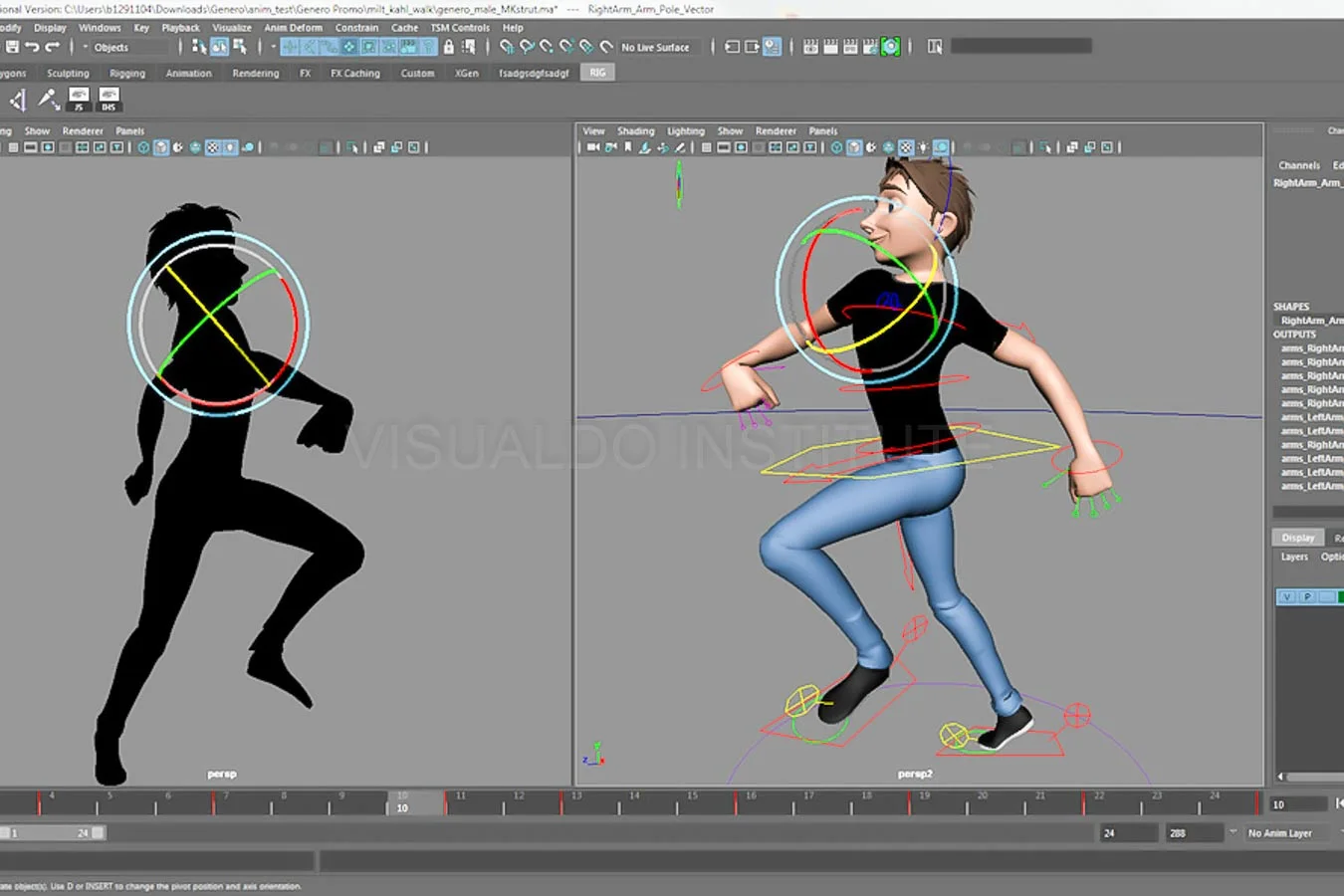
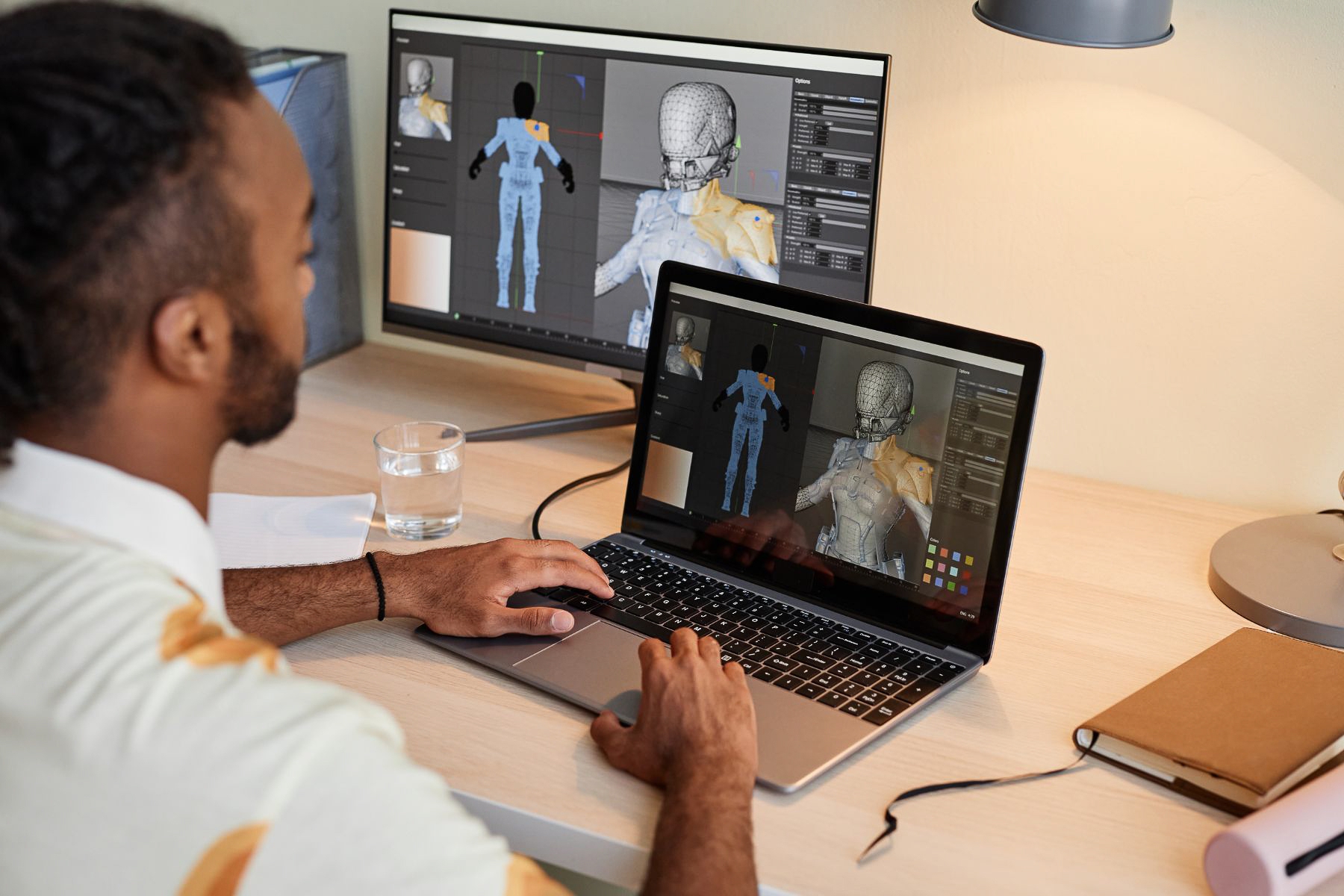

FAQs: Everything You Need to Know About Product Design Courses in Kenya
How long does it take to study Product Design courses in Kenya?
At Visualdo Institute, the duration of Product Design courses depends on the level of study you choose:
Certificate in Product Design: 12 months (4 semesters), covering foundational skills in design thinking, sketching, 3D modeling, CAD software, prototyping, and user-centered product development.
Diploma in Product Design: 24 months (8 semesters), offering in-depth training in product development, materials exploration, ergonomics, advanced 3D modeling, CAD tools, prototyping, and functional product creation.
Each program combines hands-on projects and real-world product design tasks to prepare you for a successful career in Kenya’s design and innovation industries.
How much do Product Design courses cost in Kenya?
The cost varies depending on the course level. At Visualdo Institute, we offer affordable and flexible fees:
Certificate in Product Design: Ksh 45,000 per semester (Ksh 15,000 per month).
Diploma in Product Design: Ksh 45,000 per semester (Ksh 15,000 per month).
Payment can be made in installments, and Visualdo occasionally offers scholarships to outstanding students.
Which is the best school for Product Design courses in Kenya?
Visualdo Institute in Nairobi is widely recognized as one of the top colleges for Product Design courses in Kenya. Our programs focus on hands-on training, real-world projects, and mastery of industry-standard tools such as CAD software and 3D modeling applications. Our instructors are experienced design professionals who guide students to build strong portfolios, develop practical skills, and prepare for employment in design studios, manufacturing companies, or entrepreneurial ventures.
Is Product Design course marketable in Kenya?
Yes! Product Design is one of the most in-demand creative and technical skills in Kenya and globally. With the growth of manufacturing, consumer goods, packaging, innovation, and startup ecosystems, skilled product designers are highly sought after. Graduates from Visualdo Institute can work in industrial design, product development, packaging design, innovation-based industries, or launch their own products and businesses.
By studying at Visualdo Institute, you gain both creative and technical skills that make you highly employable and ready to build a successful product design career in Kenya and beyond.
CONCLUSION: Visualdo Institute is an excellent college for students pursuing Product Design Courses in Kenya, offering a wide range of programs that help learners develop and perfect their product design skills.
Visualdo Institute is one of the leading colleges in Kenya for students pursuing Product Design, offering programs designed to enhance your creative, technical, and practical skills in designing functional, user-centered, and market-ready products.
Our Product Design courses in Kenya focus on teaching students the essential skills needed to create professional-quality products for industrial design, packaging, and innovation-based industries. The programs cover both creative and technical aspects, including design thinking, sketching, 3D modeling, CAD software, prototyping, ergonomics, and user-centered product development. These courses are ideal for aspiring product designers, industrial designers, entrepreneurs, or anyone passionate about creating practical and innovative solutions.
Why Visualdo Stands Out as Kenya’s Leading Product Design College:
Visualdo is recognized as one of the best colleges in Kenya for Product Design courses.
Visualdo offers hands-on Product Design programs in Nairobi with a focus on real-world projects.
Visualdo provides both Certificate in Product Design (12 months) and Diploma in Product Design (24 months).
Course fees are affordable, starting from Ksh 15,000 per month (Ksh 45,000 per semester), with flexible installment options.
Entry requirements: Diploma – Certificate in Product Design or equivalent; Certificate – KCSE D–.
By studying at Visualdo Institute, you gain the creativity, technical skills, and industry-ready experience needed to thrive in Kenya’s growing design, innovation, and product development industry.